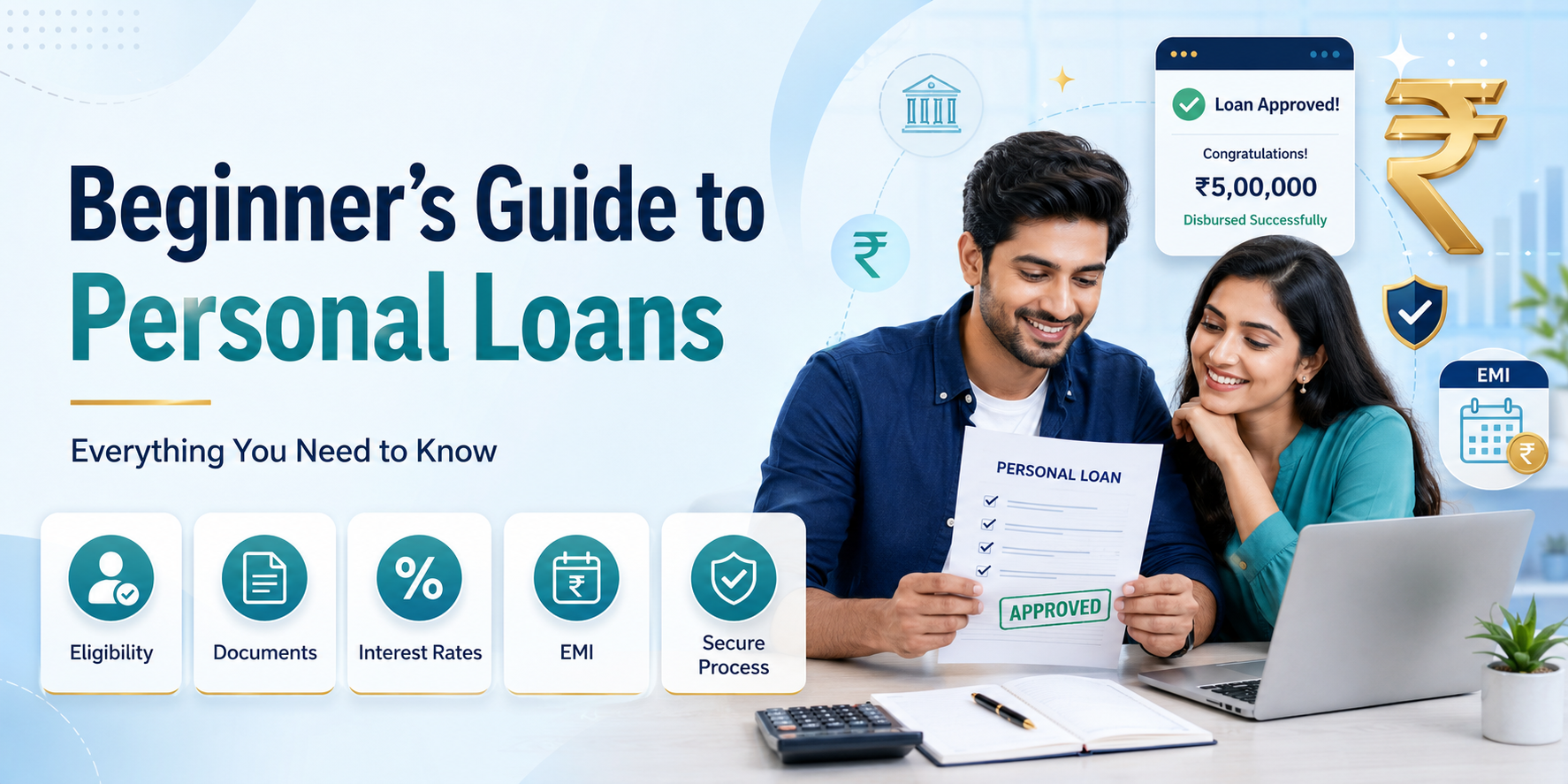
A personal loan is money you borrow from a bank or an NBFC – no collateral involved – and pay back through fixed monthly installments over an agreed period. This beginner’s guide to personal loans walks through eligibility, paperwork, interest rates, and the mistakes that trip up almost every first-time borrower.
Most people take out their first personal loan because something forced their hand: a medical bill, a wedding that came together faster than the budget did, an expense nobody saw coming. That’s really the whole point of putting together a beginner’s guide to personal loans in the first place. Know the basics before you’re in a rush, and you’re a lot less likely to sign something you’ll regret later.
What Is a Personal Loan, and Who Needs This Guide?
A personal loan is unsecured credit – you can use it for almost anything: a trip, debt consolidation, home repairs – with no asset on the line if things go wrong. That distinction is where every beginner’s guide to personal loans really ought to start, because it changes what the bank is looking at when they evaluate you.
This is probably for you if:
- You’ve never taken a loan before and aren’t sure where to even begin
- You want to compare a few lenders instead of grabbing the first offer
- You need money fast and don’t have time for a mountain of paperwork
- You’re fuzzy on how EMIs or interest actually get calculated
If any of that sounds familiar, it’s worth fifteen minutes with this beginner’s guide to personal loans before you sign anything.
Do You Actually Qualify? Checking Eligibility First
Lenders are mostly checking four things: your income, your credit score, what kind of job you have, and how much debt you’re already carrying.
Some rough benchmarks:
- Monthly income of roughly ₹15,000–25,000, depending on the city
- A credit score above 700 gets you the better rates
- Age between 21 and 60 in most cases
- At least six months to a year in your current job
Run these numbers before you apply – it saves a lot of back-and-forth later. Most guides skip this step entirely, but any beginner’s guide to personal loans worth reading puts it right up front.
What Documents Will You Actually Need?
You’ll need identity proof, address proof, income proof, and a few months of bank statements – that’s the core checklist any beginner’s guide to personal loans will give you.
- PAN card and Aadhaar card
- Salary slips from the last three months
- Six months of bank statements
- A passport-size photo
Get all of this together before you apply. This is honestly the part where a beginner’s guide to personal loans saves you the most time, since missing paperwork is the single biggest reason approvals get held up for days.
How Do Interest Rates and EMIs Actually Work?
Interest gets charged on whatever you borrow, and your EMI just bundles the principal and the interest into one fixed monthly number. A lot of the confusion first-timers run into comes from not seeing that split clearly – which is exactly the gap this beginner’s guide to personal loans tries to close.
|
Loan Amount |
Tenure | Approx. Interest Rate |
Approx. EMI |
|
₹1 lakh |
2 years | 11% | ₹4,650 |
| ₹3 lakh | 3 years | 12% |
₹9,970 |
| ₹5 lakh | 5 years | 13% |
₹11,375 |
Stretch the tenure and your EMI drops, but you end up paying more interest overall. Shorten it, and the opposite happens. Getting comfortable with that trade-off is really the whole game.
The Mistakes That Cost Beginners the Most Money
Applying to several lenders at once, borrowing more than you actually need, and glossing over processing fees – these are the three that come up again and again.
- Don’t shotgun applications to five lenders hoping one comes back faster
- Borrow what you need, not the maximum they’re willing to hand you
- Actually read the fine print on foreclosure and prepayment charges
- Pull your credit report before you apply, not after you’ve already been rejected
Any decent beginner’s guide to personal loans should lead with this section, honestly, since these are the mistakes that end up costing people the most.
How Do You Actually Land a Good Deal?
Compare at least three lenders, push back on the rate if your credit score is solid, and skip the add-on insurance nobody asked you to buy. This is usually the part of a beginner’s guide to personal loans that decides whether you overpay or not.
- Use a platform like r9wealth.com to line up offers side by side
- Ask about processing fees before you commit to anything
- Negotiate if you’ve banked with the same institution for years
- Steer clear of loans that come bundled with insurance you never requested
This comparison step is where a solid beginner’s guide to personal loans actually saves your real money instead of just sounding good on paper. Most first-time borrowers lose the most right here, simply by skipping it.
Learn more about your options with a Personal Loan from R9 Wealth before making your borrowing decision.
Frequently Asked Questions
1. How much can a beginner get approved for?
It depends heavily on income, but most of what’s covered in this beginner’s guide to personal loans applies to amounts between ₹1 lakh and ₹5 lakh.
2. Does a personal loan affect your credit score?
Yes – pay on time, and it builds your score; miss EMIs, and it takes a real hit.
3. Can a student or fresher get one?
It’s tough without steady income, though a few NBFCs do offer small loans to salaried freshers.
4. Is it safe to apply online?
Yes, as long as you stick to a verified lender or platform with proper document handling – that’s the one rule this beginner’s guide to personal loans insists on.
5. What happens if you miss an EMI?
Late fees kick in first, and repeated misses can do lasting damage to your credit score.
That covers the short version of this beginner’s guide to personal loans – enough to walk into your first application knowing what to expect.
Follow us on Instagram, LinkedIn , Facebook, and X (Twitter) for expert mutual fund insights, investment tips, and the latest financial updates.