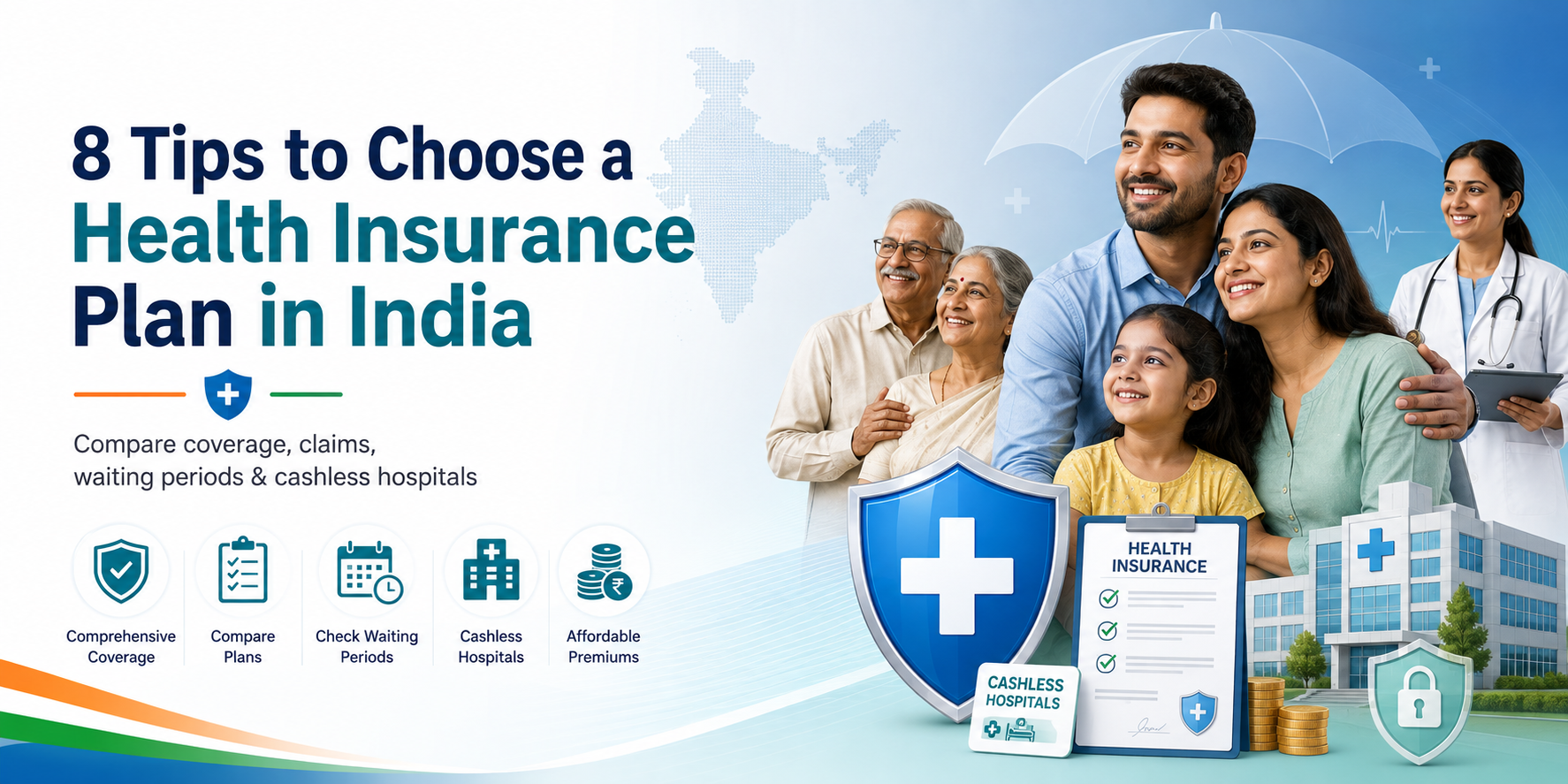
Picking the right health insurance plan in India really comes down to three things: matching your cover to your actual medical needs, checking how reliably the insurer pays claims, and reading the policy terms before you sign anything. Sort these out first, and everything else tends to fall into place.
The market is crowded, and honestly, most brochures make every plan sound just as good as the next one. That’s usually how people end up with a policy that reads fine on paper but doesn’t hold up once an actual claim gets filed.
Below are eight practical tips for choosing a health insurance plan in India, along with the things that quietly separate a strong health insurance plan from a mediocre one.
Why Does Choosing the Right Health Insurance Plan in India Matter So Much?
A poorly chosen policy can leave you underinsured at the exact moment medical costs are highest, which is why getting this decision right matters more than people assume.
Hospital bills in Indian cities have climbed fast over the past few years. A mismatched policy often means paying out of pocket anyway, even with insurance in place. A well-chosen health insurance plan in india actually closes that gap instead of just looking like it does.
A few things worth keeping in mind here:
- Wrong sum insured amounts lead to partial claims
- Hidden sub-limits quietly reduce what gets reimbursed
- Weak claim support delays treatment during emergencies
- The best health insurance in India isn’t the same for everyone. it changes by city, age, and family size
Tip One: Work Out Your Sum Insured Before Looking at Any Plan
Start by calculating the sum insured you actually need based on your city, family size, and medical history, instead of just picking a number that sounds reasonable.
Metro cities like Delhi, Mumbai, and Bangalore run far more expensive treatment costs than smaller towns do. A health insurance plan in India built with a tier-2 city in mind can fall short pretty quickly in a metro. It helps to check recent hospital bills in your own city before settling on a cover amount, rather than trusting a generic recommendation.
Tip Two: Compare Plans on More Than Just the Premium
Comparing health insurance plan in india properly means looking at the claim settlement ratio, network hospitals, waiting periods, and room rent limits together, not just whichever premium looks lowest.
| Comparison Factor | What to Check | Why It Matters |
| Claim Settlement Ratio | Percentage of claims the insurer actually pays | Tells you how reliable they are in a real emergency |
| Network Hospitals | How many are near where you live | Decides whether cashless treatment is realistic |
| Waiting Period | Time before pre-existing conditions get covered | Affects when you can actually make a claim |
| Room Rent Limit | Maximum daily room rent covered | Keeps surprise costs off your bill |
Two plans priced almost identically can behave in completely different ways once a claim actually comes in.
Tip Three: Decide Between an Individual Plan and a Family Floater
This choice depends mostly on your family size and each member’s health, since a floater plan shares one sum insured across everyone on the policy.
Families with younger, healthier members often do fine with a floater, mainly because it tends to cost less overall. Households with elderly parents, or anyone already dealing with a health condition, sometimes come out ahead with separate individual policies instead, even if that costs a bit more upfront. It’s one of those calls where paying slightly more now can save a lot of hassle down the line.
Tip Four and Five: Check the Waiting Periods and Read the Exclusions
Confirm how long the waiting period runs for pre-existing diseases and maternity benefits, and go through the exclusions list before committing to any health insurance plan in india.
Waiting periods worth confirming upfront:
- Two to four years for pre-existing diseases
- Two to four years for certain specific illnesses named in the policy
- Nine months to two years for maternity cover, where it’s included
- Thirty days for most regular illnesses, accidents aside
Skipping this step is one of the more common mistakes people make while shopping for health insurance plans in India, and it’s usually the one that causes regret later.
Tip Six: Don’t Underestimate Network Hospitals and Cashless Access
Network hospitals and cashless facilities matter a lot, since they determine whether you can actually get treated without paying anything upfront during an emergency.
An insurer might be marketed as the best health insurance in India, but if none of its network hospitals are anywhere near your home, cashless treatment becomes tricky in practice, not impossible, just inconvenient at the worst possible time. Always pull up the hospital list for your specific city before finalising anything.
Tip Seven: Think About the Right Add-Ons for Your Situation
Consider add-ons like critical illness cover, personal accident cover, and no-claim bonus protection based on your age, profession, and family medical history.
A few riders worth thinking through:
- Critical illness cover for conditions such as cancer or heart disease
- Personal accident cover for accidental disability or death
- No-claim bonus protection to hold on to accumulated benefits
- Maternity cover, useful for younger couples planning a family soon
Add-ons push the premium up a little, but they often plug gaps that a standard health insurance plan in india simply doesn’t cover on its own.
Tip Eight: Verify the Fine Print Before You Pay
Go through the policy wording, sub-limits, co-payment clauses, and renewal terms carefully before making the final payment on any health insurance plan in india.
A few last things worth checking:
- Co-payment clauses that quietly reduce your claim amount
- Renewal age limits and whether lifetime renewability is guaranteed
- Whether day-care procedures are actually covered
- Any restrictions tied to specific treatments or hospitals
Getting these details sorted early saves a lot of back-and-forth during an actual claim later. For a more detailed look at available options, this guide on health insurance is worth going through.
Frequently Asked Questions
1. What is a good sum insured for a health insurance plan in India?
A cover of 5 to 10 lakh works for most individuals, though metro city residents often need a higher amount.
2. Is a family floater always cheaper than individual health insurance?
Usually, yes, but it depends heavily on the age and health condition of each family member being covered.
3. How long is the waiting period for pre-existing diseases?
Most insurers set this between two and four years, depending on the specific health insurance plan chosen.
4. Can I switch my health insurance plan in india later?
Yes, porting to another insurer is allowed, and past waiting periods usually carry forward under IRDAI rules.
5. Does health insurance cover COVID-19 related hospitalisation?
Most current health insurance plan in India include coverage for COVID-19 hospitalisation, subject to policy terms.
Follow us on Instagram, LinkedIn , Facebook, and X (Twitter) for expert mutual fund insights, investment tips, and the latest financial updates.