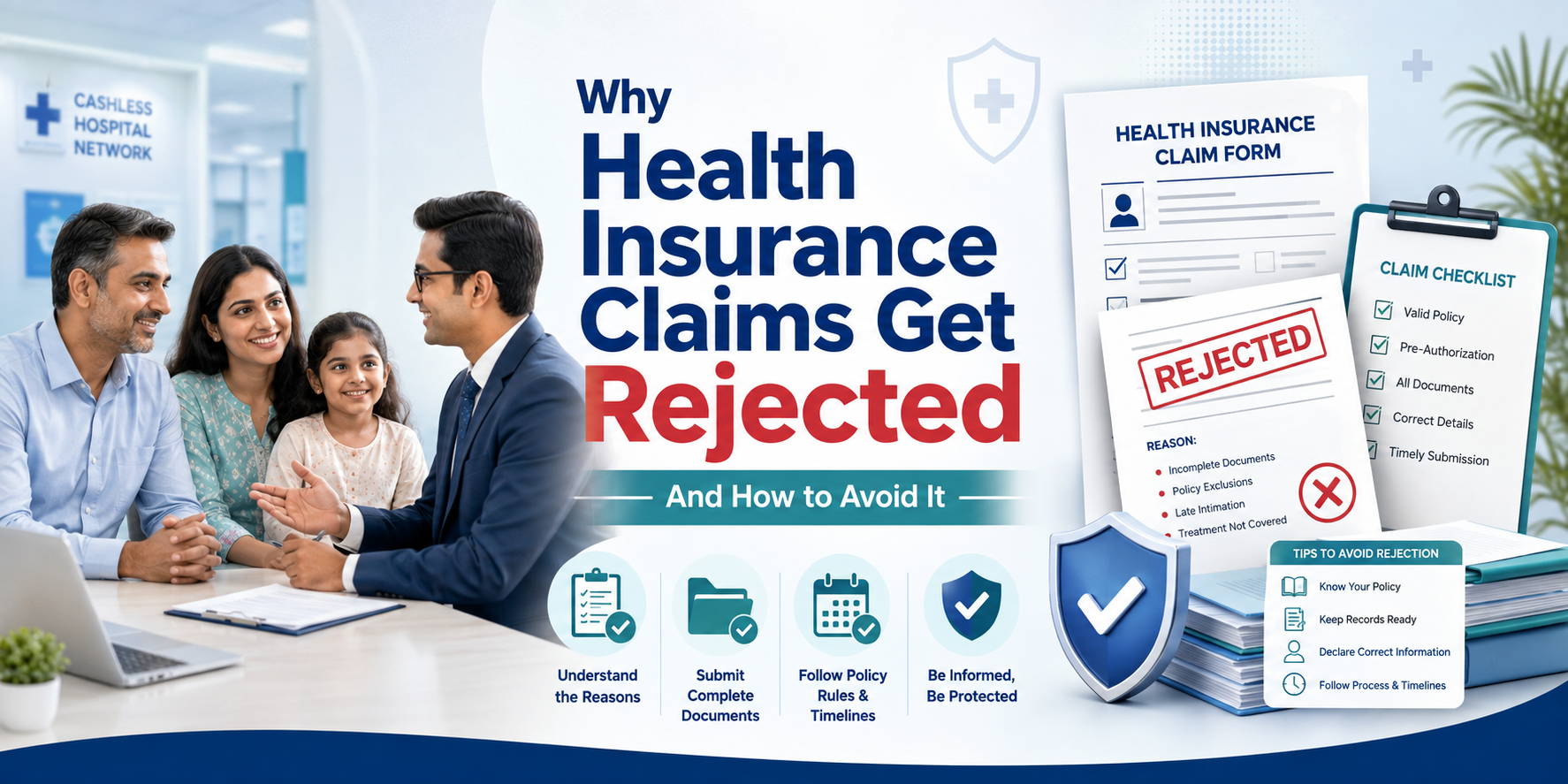
Health insurance claims get rejected for a handful of predictable reasons: missing paperwork, policy exclusions, missed deadlines, and details that do not match what was declared at purchase. Learn these traps early, and a rejected claim becomes far less likely.
Thousands of policyholders learn this the hard way. Their health insurance claims get rejected for reasons that could have been sorted out beforehand. Here is what actually causes the trouble, and what helps.
Why Do Health Insurance Claims Get Rejected Most Often?
Paperwork gaps, late reporting, and treatments outside the policy scope sit behind most cases where health insurance claims get rejected. Insurers run several checks before approving a payout, and one weak spot is often enough to sink the whole claim.
A few patterns keep showing up:
- Hospital bills sent without a clear breakup
- Treatment that the policy never included
- Claims filed past the cut-off date
- Form entries that do not match hospital records
Once you know what insurers look for, filing a claim that clears review without a fight gets much easier.
Which Policy Exclusions Cause Health Insurance Claims to Fail?
Exclusions buried in the policy document explain a large chunk of why health insurance claims get rejected. Every plan lists conditions, treatments, or situations it simply refuses to cover, and claims linked to those get turned down without much discussion.
Some exclusions come up more than others:
- Cosmetic or dental treatment, unless it follows an accident
- Pre-existing conditions still inside the waiting period
- Self-inflicted injuries or treatment taken abroad
- Alternative therapies the policy never names
Go through the exclusion clauses before you sign anything, since it saves real trouble later. Some hospitals also bill in formats that clash with an insurer’s exclusion terms, so checking with the billing desk beforehand rarely hurts.
How Does Incomplete Information Lead to Rejected Claims?
Small paperwork gaps are usually why health insurance claims get rejected once verification begins. Insurers match every claim detail against hospital and medical records before releasing any payment.
These errors seem minor but cause real damage:
- Wrong age, name, or policy number on the form
- Signatures missing, or documents left unattested
- Blank fields in the reimbursement application
- Diagnosis codes that do not line up between hospital and insurer
Slowing down before submission and checking each field twice stops most of these problems before they start.
What Role Does Late Claim Intimation Play in Rejection?
Insurers work within a fixed window for hospitalisation updates, and missing that window is one of the top reasons health insurance claims get rejected. Report even a day late, and it can be called a breach of the policy terms.
Here is how the standard timelines usually break down.
| Claim Type | Standard Intimation Window | Risk of Rejection |
| Planned Hospitalisation | 2 to 4 days before admission | Low, if intimated on time |
| Emergency Hospitalisation | 24 to 48 hours after admission | Moderate, if delayed |
| Reimbursement Claims | Within 15 to 30 days of discharge | High, if submitted late |
A phone reminder set the moment admission happens keeps this schedule on track and protects your health insurance claims from delays that were entirely avoidable.
Can Non-Disclosure of Medical History Affect Health Insurance Claims?
Yes. Hiding past medical history is one of the fastest ways health insurance claims get rejected. Insurers do not treat this lightly. It counts as a direct breach of trust, and there is rarely any explaining it away.
A few situations come up more than people expect:
- Leaving out a pre-existing illness while buying the policy
- Not mentioning medication or ongoing treatment
- Downplaying habits such as smoking or drinking
- Never telling the insurer about a fresh diagnosis
Declare your health details truthfully at purchase. The premium might go up a little, but the claim stays protected when you actually need it most.
How Can You Prevent Health Insurance Claims from Getting Rejected?
Reading the policy closely, reporting hospitalisation on time, and keeping documents ready before treatment starts are the surest ways of preventing health insurance claims from getting rejected.
A handful of habits make the real difference:
- Read the full policy wording before signing up
- Keep bills, prescriptions, and reports filed together
- Notify the insurer within the required window
- Choose network hospitals for cashless treatment where possible
- Talk to an advisor before locking in a plan
Most rejections come down to a small, fixable gap rather than a major mistake. A trusted advisor for Health Insurance such as R9 Wealth can help you pick a suitable policy and avoid these errors from day one.
Frequently Asked Questions
1. Why do health insurance claims get rejected the most?
Missing documents, policy exclusions, and late intimation are the top reasons for rejection.
2. Can a claim be rejected for wrong information on the form?
Yes, incorrect or mismatched details often lead to direct rejection during verification.
3. Is there a time limit to file a health insurance claim?
Yes, most insurers require intimation within 24 to 48 hours for emergencies and 15 to 30 days for reimbursement.
4. Does hiding medical history affect claim approval?
Yes, non-disclosure of past health conditions is a common reason for rejection.
5. How can policyholders reduce claim rejection risk?
Reading the policy carefully and submitting complete, accurate documents on time reduces rejection risk.
Follow us on Instagram, LinkedIn , Facebook, and X (Twitter) for expert mutual fund insights, investment tips, and the latest financial updates.